Yes, if there is bridging and your render or pebble dashing touch the floor, this creates a bridge for the damp to rise up the wall

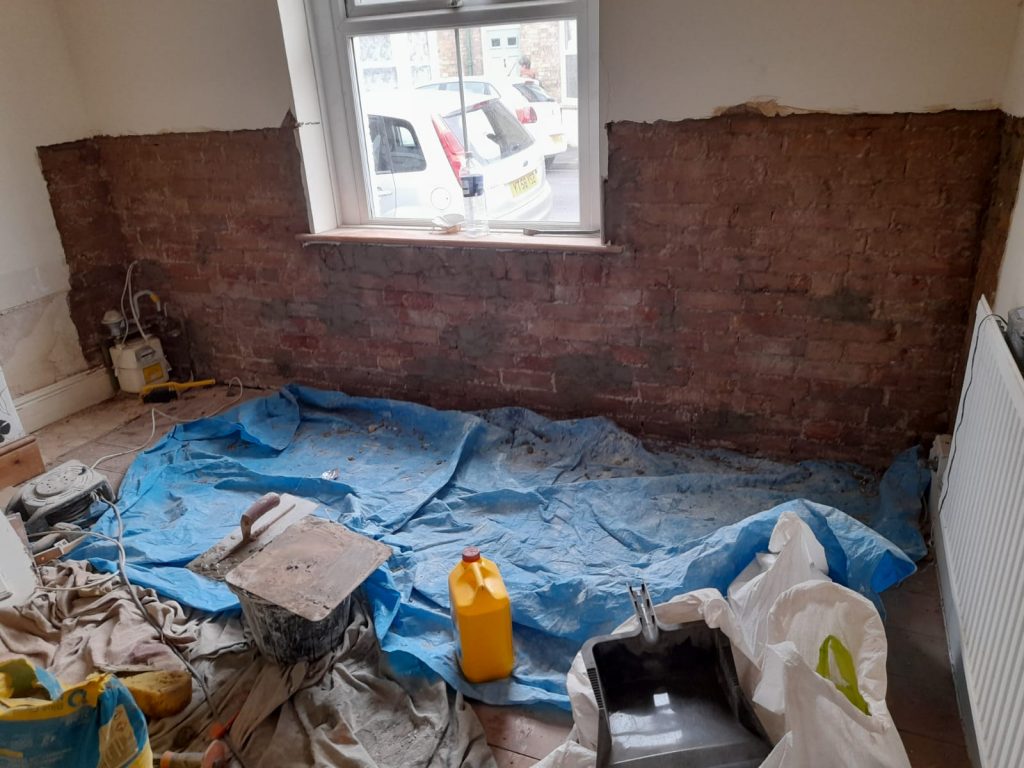
The first sign of damp is the plaster peeling off the walls, this is effervescence, the salt and damp migrating out of the brick wall before the plaster breaks away. the next sign is plaster crumbling and coming away in your hands. If you have rising damp in your property, first you would be required to find the source of the damp, be it a leaking pipe in the walls or a broken drain pipe outside causing the wall to soak in the damp.
Once the initial problem is solved, we would recommend you damp course your property. This involves stripping back the plaster to bare brick and then putting damp coursing and injecting damp proofing cream into the walls. We inject the wall 3 quarters the depth of the brick, fill it with cream that turns to wax, the cream migrates along the cement course and forms a waterproof membrane to create a barrier between the brickwork which will stop the damp from rising. The wall can then be re-rendered safe in the knowledge the damp issue will be fixed and you will no longer get mould and rising damp on your walls.